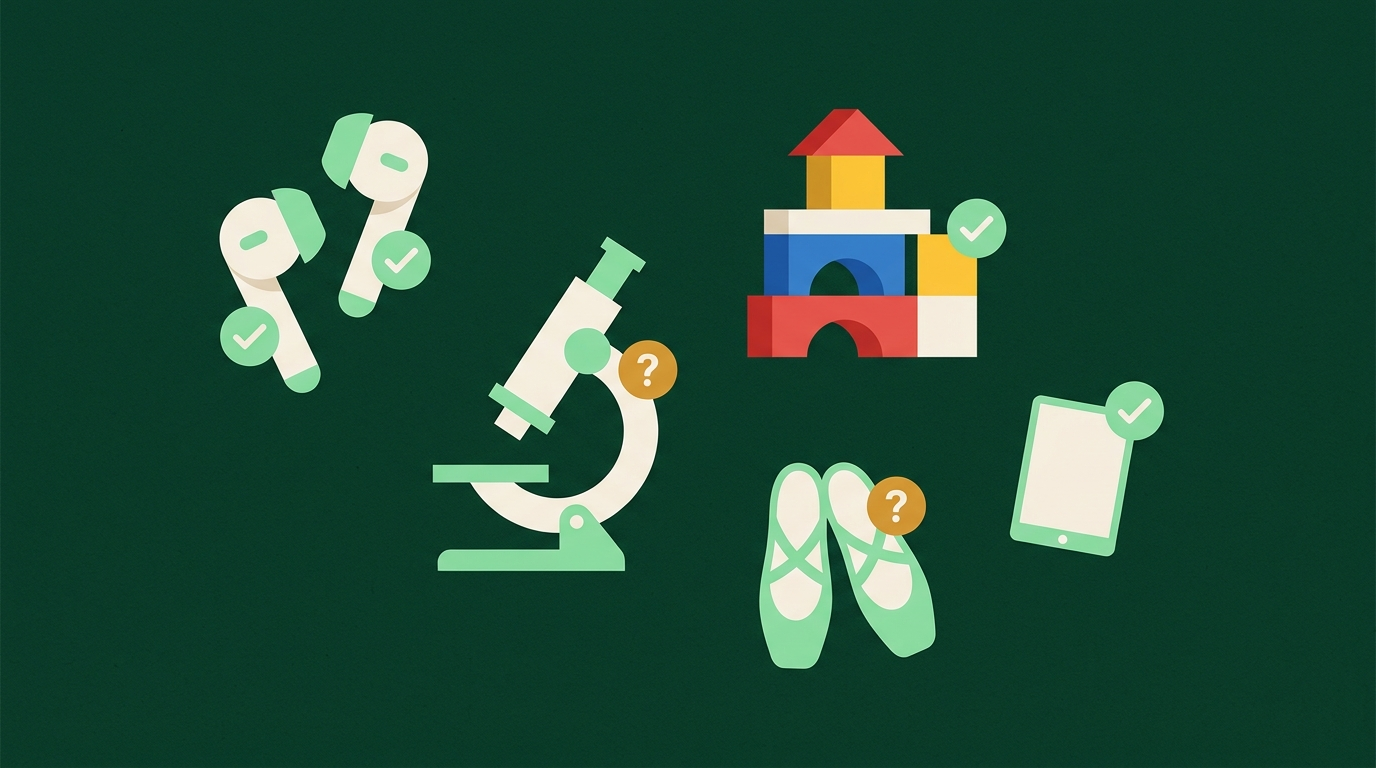
Whether a purchase is ESA approved depends on category mapping, not the item itself: programs approve categories like curriculum, tutoring, and technology, and reviewers check whether your item fits one cleanly. Gray zones like earbuds, 3D printers, and LEGO clear when the educational framing and documentation are right, and bounce when they read as personal or household purchases. Always check against your own state's current rules, because the same item can clear in Arizona, hit a cap in Texas, and hit a frequency limit in Florida.
Every day, in every state ESA Facebook group, the same kind of question appears: "Is it permitted to purchase dance shoes if they are required for dance class? If it is allowed, what category would it go under?" That one is real, posted by a parent, and it sat unanswered. So did the parent asking whether earbuds count as headphones, and the one asking whether a 3D printer counts as a printer.
These questions repeat endlessly because the handbooks are written in categories and parents shop in items. The handbook says "headphones." The cart says AirPods. Someone has to bridge that gap, and in most families that someone is you, at 10pm, with your own money as the penalty for guessing wrong.
This guide covers the logic behind the gray zones, with the most-asked items as worked examples. Rules current as of July 2026; your program makes every final call.
Why gray zones exist at all
ESA programs approve categories, not products. Curriculum, tutoring, instructional materials, technology, educational services. A purchase clears when a reviewer can map it to an approved category without stretching. It bounces when the mapping is ambiguous, when the item smells like a household or personal expense, or when the documentation doesn't make the educational purpose obvious.
That means the same item can clear for one family and bounce for another, on the strength of nothing but framing and paperwork. Understanding that is most of the game.
The most-asked items, answered
Earbuds vs. headphones
The classic. Arizona's handbook lists headphones as an approved tech accessory for online learning. It does not say earbuds. Some parents get earbuds approved as headphones, some get denied, and reported outcomes suggest a pattern: cheap wired earbuds fare better than premium wireless ones, because a $20 purchase reads as a learning accessory while AirPods Pro read as personal electronics.
3D printers
The handbook says "printers." Whether that stretches to 3D printers is genuinely unresolved, and parents have gotten both outcomes. A 3D printer tied to a documented STEM curriculum has a real path; a big-ticket model with no curriculum context invites scrutiny. Expect a reviewer to look twice at anything over a few hundred dollars.
LEGO sets
The product line matters more than the brand. LEGO Education sets (SPIKE, robotics kits) pass as STEM materials. A regular retail set is exactly the kind of purchase Arizona's Attorney General has flagged as unallowable. If the box says Education, you have a case. If it says Star Wars, you don't.
Dance shoes and sports gear
Required equipment for an approved class can clear as class equipment. But footwear also reads as clothing, which is denied nearly everywhere. Reported outcomes turn on whether the class itself is ESA-paid and whether the invoice frames the shoes as required equipment for it. Standalone shoe purchases usually bounce.
Museum and zoo memberships
Educational memberships are frequently approved as field-trip or supplemental education expenses. Denials cluster around family add-ons and guest passes. The student-tier membership is the version that clears.
Internet service
One of the most common denied requests in every program. Household utilities are not eligible, even though online school obviously needs them. Don't front money expecting this one back.
Not sure about a specific item? Run it through the free checker: pick your state, type the item, and get the current-rules answer with the source cited. No account needed.
Check it freeThe three questions that predict approval
- Can a reviewer map it to an approved category in one step? If you need two sentences to explain the connection, expect questions.
- Does the price fit the purpose? A $90 microscope for a science unit clears. A $2,000 telescope draws an audit flag even where astronomy is clearly educational, and yes, that example comes from a documented parent case.
- Does the paperwork show the educational use? Receipts have been rejected because a lesson plan was missing the child's name. The item was fine. The documentation wasn't.
When the answer is genuinely unknowable
Some purchases have no documented precedent. For those, the honest play is to ask your program in writing before spending, or to have someone check the current handbook for you. What you should not do is trust a confident answer from an old forum thread: rules changed in multiple states this year, and advice written under last year's rules is now wrong in both directions.
Done guessing? ESA Answers turns every receipt into a submission-ready packet that clears, checks purchases before you buy, and keeps your audit binder current. First 2 packets and unlimited checks are free, no credit card.
Start free